🧧 Beijing Spring Festival
Beijing Spring Festival is the regional form of Lunar New Year in China · Beijing, centered on hanging spring couplets, visiting temple fairs, staying up for the New Year, New Year visits.

- hanging spring couplets
- visiting temple fairs
- staying up for the New Year
- New Year visits
- dumplings
- rice cake
- candied hawthorn
- drums temple fair
- yangge dance
Map-ready facts
This guide turns the Beijing, China local version into a map-ready entry while keeping sources, calendar context, and cultural meaning visible.
- Source-backed guide: UNESCO Intangible Cultural Heritage, Beijing Municipal Government
- Festival core: Lunar New Year
- Cultural meaning: Lunar New Year matters because it turns renewal, reunion, blessing, and a fresh seasonal start into a visible cultural system of time, place, family, and public ritual.
Continue in the 3D map
Open the map focused on the Beijing festival card, with country, region, and festival context preserved.
Continue in the 3D mapVisual journey
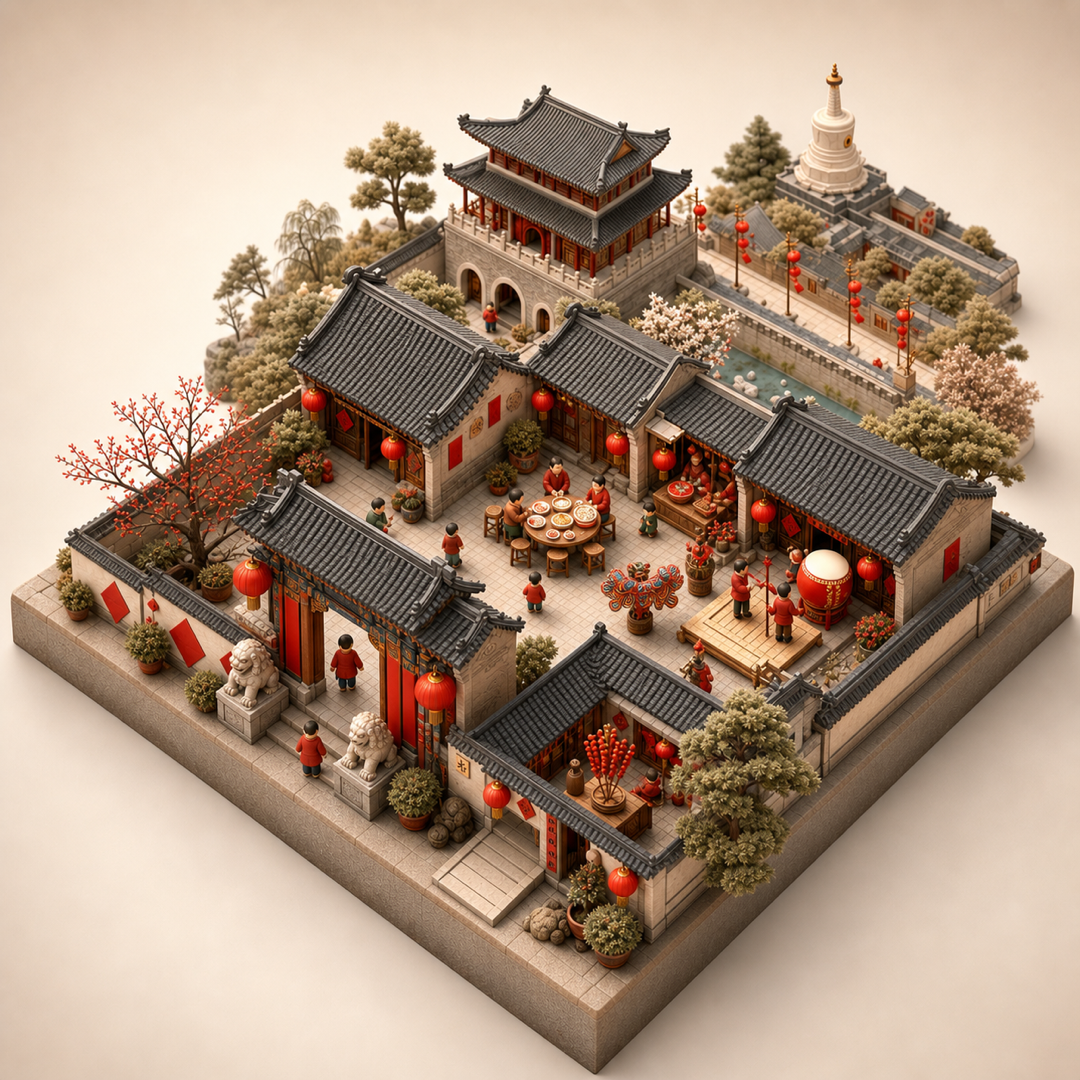
AI-generated cultural illustration for MapDepth; not a documentary photograph.
- Lanterns and spring couplets: Red lanterns, spring couplets, and fu decorations make blessing, renewal, and household thresholds visible in the city. New Year festivals
- Dumplings and reunion table: Dumplings, rice cake, and the reunion meal connect the public holiday season back to family time.
- Temple fair cues: Beijing temple fairs gather snacks, performance, blessing visits, and urban memory into public festival routes. China festivals
- Festival drum cue: The scene places drums or instruments beside the ritual objects so the festival reads as sound as well as image.
- Beijing central-axis rooflines: Pavilion rooflines, the white pagoda, and central-axis cues connect Beijing Spring Festival with heritage space, city outings, and holiday routes.
A day at Beijing Spring Festival
Beijing's New Year starts with the reunion dinner on New Year's Eve and peaks at temple fairs such as Ditan, Longtan and Changdian; the Ditan fair has run for more than 35 years.
- New Year's Eve, daytime · Hutong doorways — Couplets and lanterns go up: On New Year's Eve households paste red couplets beside their doors and hang red lanterns. The Spring Festival joined UNESCO's intangible heritage list in 2024, and these doorway customs are part of it.
- New Year's Eve, night · The family table — Reunion dinner and dumplings: The family gathers for the reunion dinner; northern households traditionally make dumplings together and stay up to see the new year in.
- Days 1–7, mornings · Ditan Park — Ditan temple fair: The Ditan Spring Festival fair is past its 35th edition. On the mornings of days 1–7 a stage re-enacts the Qing-dynasty earth sacrifice, and visitors pray at the Hundred Blessings Wall and ring the Ditan bell.
- Fair days · Longtan Park — The Longtan drum: The Longtan fair is known for striking the Longtan drum for good luck, plus heritage street-vendor calls and ice-and-snow play; 2025 was its 39th edition.
- Evening · Liulichang · Changdian fair — Lights over Changdian: The Changdian fair fills Liulichang's east and west streets and was among China's first national intangible heritage items. Shopfronts recreate a Qing New Year still-life painting, and 2025 added a light show for the first time.
Five senses
- Hear: The Longtan drum struck for luck, and gongs from the fair stages.
- Taste: Dumplings made and eaten together on New Year's Eve.
- See: Ditan's re-enacted Qing earth sacrifice, mornings of days 1–7.
- Feel: Ringing the Ditan bell and making a wish at the Hundred Blessings Wall.
Temple-fair line-ups, dates and shows are announced each year.
Traditions and customs
- hanging spring couplets
- visiting temple fairs
- staying up for the New Year
- New Year visits
Food and symbols
- dumplings
- rice cake
- candied hawthorn
- 红色装饰
- 传统服饰
- ancestor worship
When it is celebrated
Beijing Spring Festival timing: First day of the first lunar month. It usually falls in January or February.
Beijing Spring Festival
Lunar New Year matters because it turns renewal, reunion, blessing, and a fresh seasonal start into a visible cultural system of time, place, family, and public ritual.
Beijing Spring Festival details
- Celebrates: The lunar new year, family reunion, ancestor remembrance, prayers for good fortune, and Beijing's public New Year customs.
- Local roots: Beijing's version builds on the wider Chinese Spring Festival; temple fairs, shehuo performance, yangge, and blessing visits around the city's ritual spaces developed through late imperial urban custom and are now organized through heritage sites and community events.
- Local history: Beijing Spring Festival connects family feasts, spring couplets, New Year visits, and temple fair outings. Activities around sites such as Ditan, Longtan, Changdian, Dongyue Temple, the Temple of Heaven, and the Central Axis turn the holiday from a household observance into a citywide public season.
- Cultural meaning: This local version turns reunion, renewal, and blessing into a distinctly Beijing mix of urban memory, ritual landmarks, and public holiday outings.
Signature practices
- temple fair outings
- hanging spring couplets and fu characters
- New Year's Eve family dinner and vigil
- blessing visits around the Central Axis and temple sites
- yangge and folk performances
Customs
- hanging spring couplets
- visiting temple fairs
- staying up for the New Year
- New Year visits
Food
- dumplings
- rice cake
- candied hawthorn
Music / Dance
- drums temple fair
- yangge dance
Symbols
- 红色装饰
- 传统服饰
- ancestor worship
FAQ
What is Beijing Spring Festival?
Beijing Spring Festival is the local form of Lunar New Year in China · Beijing, with customs such as hanging spring couplets, visiting temple fairs, staying up for the New Year, New Year visits.
When is Beijing Spring Festival celebrated?
Beijing Spring Festival timing: First day of the first lunar month. It usually falls in January or February.
What traditions are associated with Beijing Spring Festival?
Common traditions include hanging spring couplets, visiting temple fairs, staying up for the New Year, New Year visits, dumplings, rice cake.
Sources
Editorial sources support the festival background, local customs, and cultural notes on this guide.
- Spring festival, social practices of the Chinese people in celebration of traditional new year · UNESCO Intangible Cultural Heritage
- Trip of Beijing-Style Spring Festival at World Cultural Heritage Sites · Beijing Municipal Government
- 热闹逛庙会,开启北京春节“经典奇遇” · 北京旅游网 visitbeijing.com.cn
Image credits
Image licensing and credit details match the visible image used on this page.
Photo: storyvillegirl · CC BY-SA 2.0 · license: CC BY-SA 2.0 · source page
Continue in the 3D map
Open the map focused on the Beijing festival card, with country, region, and festival context preserved.
Continue in the 3D map