💀 Día de Muertos Oaxaca
Día de Muertos Oaxaca is the regional form of Day of the Dead in Mexico · Oaxaca, centered on family ofrendas, cemetery vigils, marigold paths, honoring the dead.
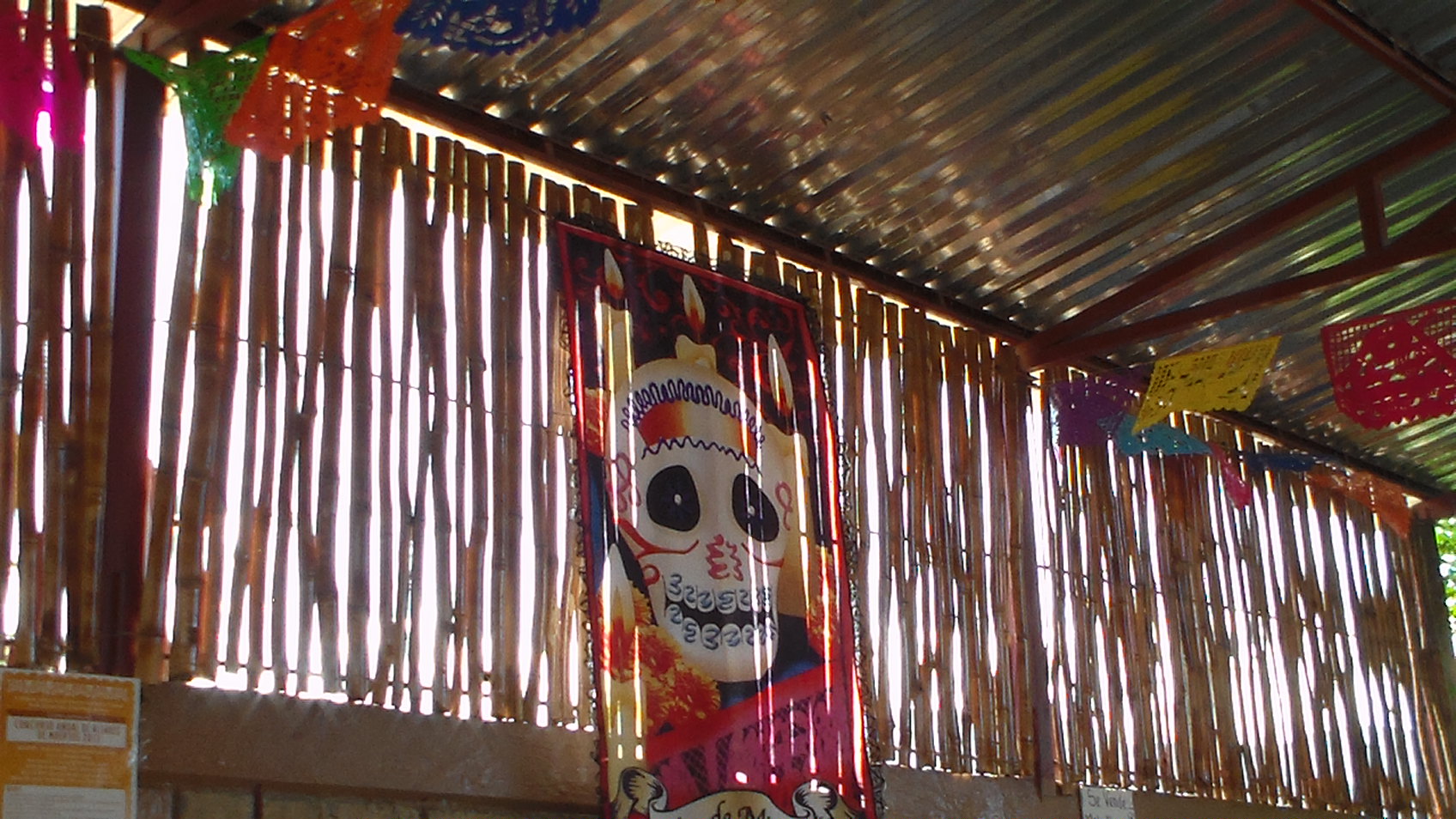
- family ofrendas
- cemetery vigils
- marigold paths
- honoring the dead
- pan de muerto
- tamales
- hot chocolate
- cemetery prayer songs
- street bands
- folk songs
Map-ready facts
This guide turns the Oaxaca, Mexico local version into a map-ready entry while keeping sources, calendar context, and cultural meaning visible.
- Source-backed guide: UNESCO Intangible Cultural Heritage
- Festival core: Day of the Dead
- Cultural meaning: Day of the Dead matters because it turns memory, respect, and shared cultural continuity into a visible cultural system of time, place, family, and public ritual.
Continue in the 3D map
Open the map focused on the Oaxaca festival card, with country, region, and festival context preserved.
Continue in the 3D mapVisual journey
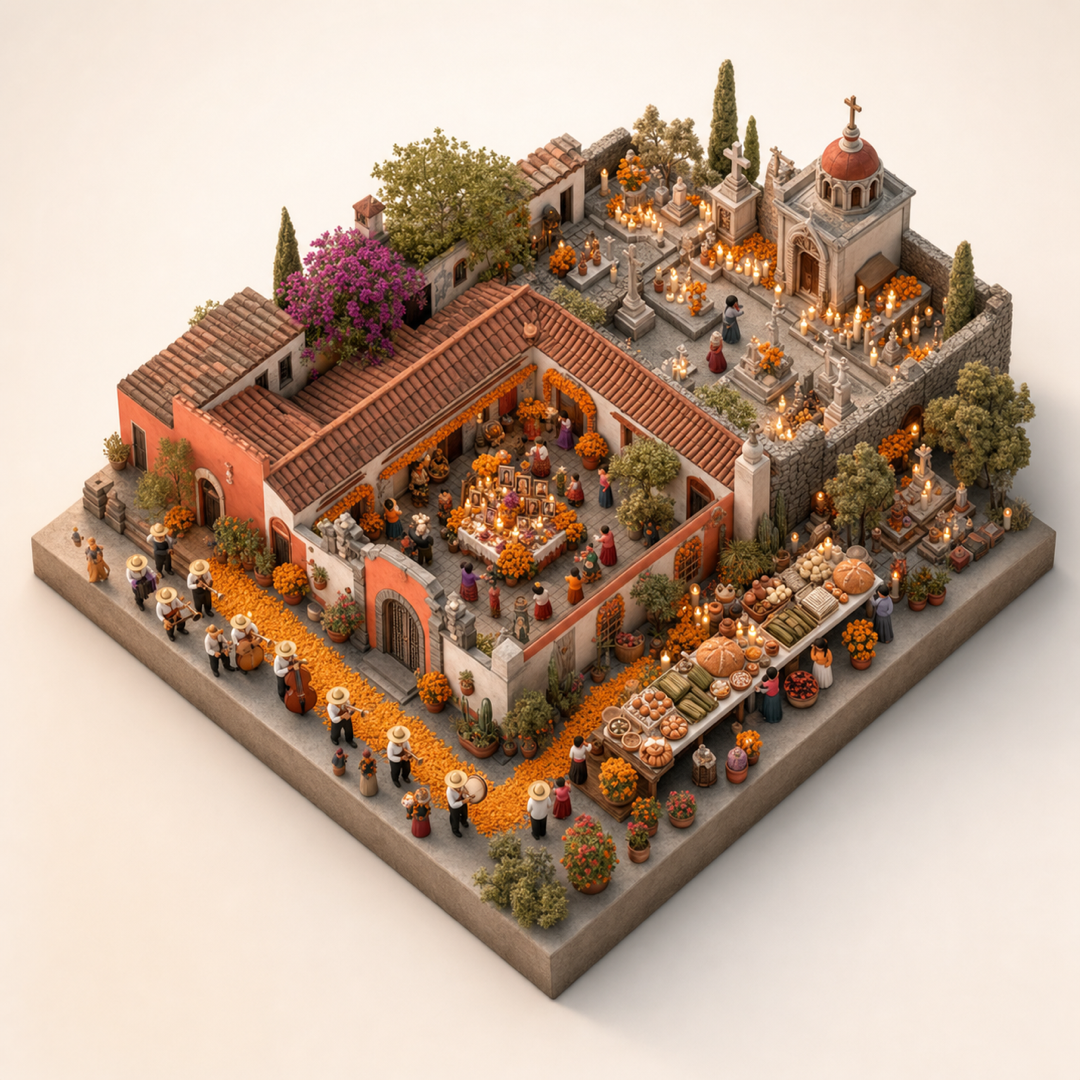
AI-generated immersive miniature model for MapDepth; not a documentary photograph.
- Marigold paths: Marigold paths create the visual route between altar and cemetery, turning remembrance into the first readable path through the model.
- Family ofrenda table: Frames, candles, and flowers make the family ofrenda the quiet center of private remembrance.
- Oaxaca cemetery candles: The cemetery path and rows of candles ground the scene in Oaxaca night visits.
- Pan de muerto and tamales: Pan de muerto, tamales, and warm drinks make the offerings read as tangible festival foods.
- Street band route: The small band and walking route extend the altar into public neighborhood memory.
A day at Día de Muertos Oaxaca
Oaxaca's Day of the Dead starts in late October as markets fill with marigolds; on the night of October 31, families in Xoxocotlán keep candlelit watch at the graves.
- From Oct 28 · Abastos and 20 de Noviembre markets — The markets turn orange: From late October the Abastos and 20 de Noviembre markets overflow with marigolds and the first public altars appear. Abastos is the cheapest place for tamales and mole, about 80–150 pesos.
- Oct 31–Nov 1 · The family altar — Building the ofrenda: October 31 is for altars to children who have died; November 1 is the day every family sets out its ofrenda. Oaxacan altars use black clay pottery, mole negro, mezcal and marigolds.
- 8–10 pm · Zócalo · Macedonio Alcalá — Comparsas hit the streets: October 31 and November 1 are the big comparsa nights: satirical costumed parades leaving around 8–10 pm and winding through the Zócalo, Macedonio Alcalá and the 20 de Noviembre market area.
- Night of Oct 31 → dawn Nov 1 · Xoxocotlán cemetery — A night at the graves: From the afternoon of October 31 families clean the graves, heap them with marigolds, light candles and keep watch all night until the morning of November 1, while a brass band plays at the gate. Xoxocotlán is about 8 km out of town, with shuttles.
- Nov 2–3 · At the grave and at home — Bread dipped in chocolate: Oaxaca's pan de muerto looks back at you: a small face moulded from dough and painted with vegetable colours. Families dunk it in chocolate at the cemetery; on November 3 altars come down and the offerings are shared at home.
Five senses
- See: Cartloads of marigolds in the late-October markets.
- Taste: Face-topped pan de muerto dipped in chocolate.
- Feel: A whole night kept at the graveside by candlelight.
Parade routes and cemetery arrangements vary a little each year.
Traditions and customs
- family ofrendas
- cemetery vigils
- marigold paths
- honoring the dead
Food and symbols
- pan de muerto
- tamales
- hot chocolate
- 供品
- 烛火
- 万寿菊
- ofrenda
- marigold path
- festival market
When it is celebrated
Día de Muertos Oaxaca timing: Around October 31 to November 2. It usually falls in October or November.
Día de Muertos Oaxaca
Day of the Dead matters because it turns memory, respect, and shared cultural continuity into a visible cultural system of time, place, family, and public ritual.
Día de Muertos Oaxaca details
- Celebrates: The temporary return of deceased relatives and loved ones, welcomed through family altars, cemetery vigils, marigolds, food offerings, and community memory.
- Local roots: The Oaxaca version draws on the fusion of Indigenous Mexican practices for the dead with Catholic All Saints' and All Souls' observances, expressed strongly in both city and village settings.
- Local history: Día de Muertos in Oaxaca is built from family ofrendas, cemetery vigils, marigold paths, candles, food, and music. The city and surrounding communities transform private remembrance into a public cultural landscape.
- Cultural meaning: This local version treats remembrance of the dead as a living ritual shared by kinship, Indigenous tradition, urban festivity, and Mexican identity.
Signature practices
- family ofrendas
- cemetery vigils
- marigold paths
- pan de muerto and tamal offerings
- street bands and processions
Customs
- family ofrendas
- cemetery vigils
- marigold paths
- honoring the dead
Food
- pan de muerto
- tamales
- hot chocolate
Music / Dance
- cemetery prayer songs
- street bands
- folk songs
Symbols
- 供品
- 烛火
- 万寿菊
- ofrenda
- marigold path
- festival market
FAQ
What is Día de Muertos Oaxaca?
Día de Muertos Oaxaca is the local form of Day of the Dead in Mexico · Oaxaca, with customs such as family ofrendas, cemetery vigils, marigold paths, honoring the dead.
When is Día de Muertos Oaxaca celebrated?
Día de Muertos Oaxaca timing: Around October 31 to November 2. It usually falls in October or November.
What traditions are associated with Día de Muertos Oaxaca?
Common traditions include family ofrendas, cemetery vigils, marigold paths, honoring the dead, pan de muerto, tamales.
Sources
Editorial sources support the festival background, local customs, and cultural notes on this guide.
- Indigenous festivity dedicated to the dead · UNESCO Intangible Cultural Heritage
- Day of the Dead in Oaxaca: Your Complete Guide · Mexico Travel & Leisure
- Santa Cruz Xoxocotlán, donde los muertos regresan a casa entre flores, velas y memoria · UnoTV
- Día de los Muertos Oaxaca: Noche de Vela in Xoxocotlán · The Drunk Wedding Photographer
- Pan de muerto: the bread of the Day of the Dead · National Geographic
Image credits
Image licensing and credit details match the visible image used on this page.
Photo: A01335977 · CC BY-SA 3.0 · license: CC BY-SA 3.0 · source page
Continue in the 3D map
Open the map focused on the Oaxaca festival card, with country, region, and festival context preserved.
Continue in the 3D map